
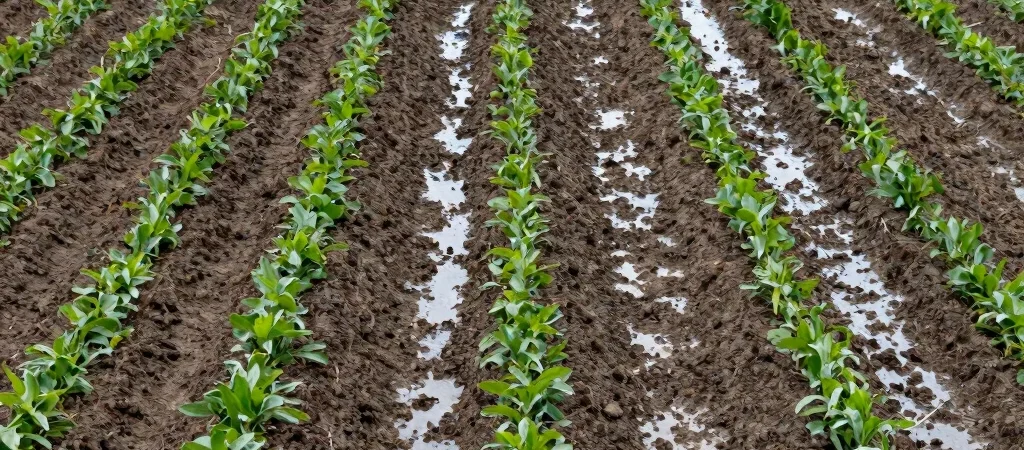
The gauge says rain came through overnight, but one end of the field still looks stressed by midday. That mismatch is a reason to check conditions, not to assume the whole field received the same effective rainfall. Soil texture, slope, residue, and storm path can all shape where water goes.
Look beyond the gauge
A rain gauge records precipitation at its location; it does not show how much water infiltrated across the field or remained available to roots. Compare the reading with observations from representative areas, especially where soils or drainage differ. Recent rainfall history matters too, since a dry surface can conceal moisture below, while a wet surface may sit over a root zone that is drying.
Check crop and soil conditions
Crop water demand changes with growth stage and weather, so the same soil condition can call for different attention at different points in the season. Check moisture at a depth relevant to the crop’s active roots, using a consistent method you can repeat. Look for patterns across the field rather than making a decision from a single stressed plant or low spot.
Use tools with context
Weather records and on-site tools can help organize a decision, but their usefulness depends on the inputs and assumptions behind the result. Confirm the location, time period, and units before comparing an output with field observations, and follow local extension or irrigation guidance for crop-specific thresholds. When the evidence is mixed, record what you saw and check again before treating one reading as the whole-field answer.